

Wild & Exotic Animal Attack Claims in Missouri: Zoo and Private Keeper Liability
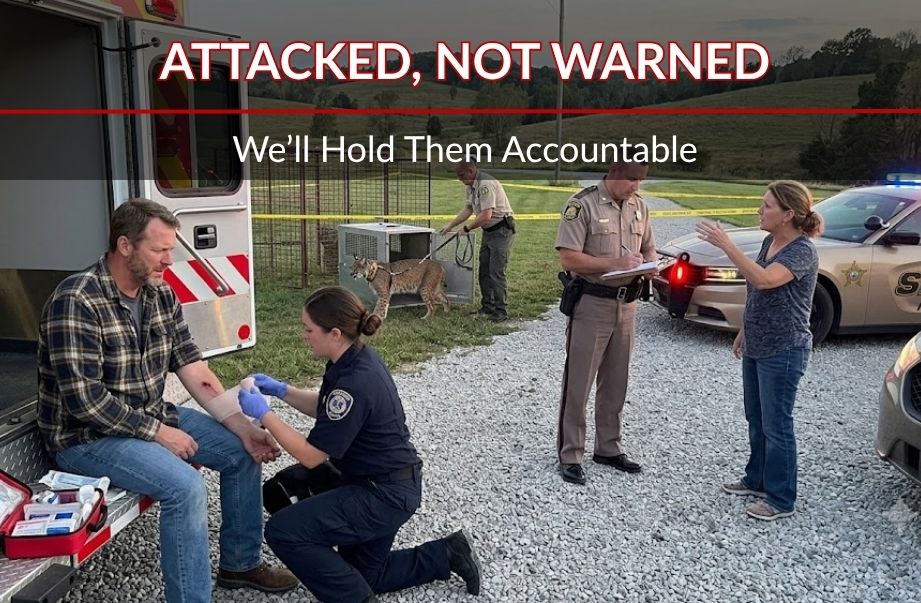
Most people never imagine being hurt by a bear, a big cat, or a venomous snake. Then it happens, at a roadside exhibit, a zoo, or a neighbor’s property where someone kept an animal that never belonged in a backyard, and the injuries are often severe. If a wild or exotic animal hurt you or someone you love in Missouri, there is something important you should know up front.
You may have a claim even if you cannot prove the keeper knew that particular animal was dangerous. The law treats wild animals very differently from the family dog, and that difference can work strongly in your favor. Let us walk through how these cases actually work.
How a Missouri Wild Animal Attack Lawyer Proves a Case Differently Than a Dog Bite?
Animal injury law draws a hard line between domestic animals and wild ones, and which side of that line your case falls on changes everything about how it is proved.
With domestic animals like dogs and cats, the injured person usually has to show the owner knew or should have known that specific animal had dangerous tendencies. That is the idea loosely called the “one free bite,” though many places have layered dog-bite statutes and ordinances on top of it. The assumption is that a dog is not inherently dangerous, so liability turns on what the owner knew.
Wild and exotic animals are a different story. Species that are not domesticated, bears, lions, tigers, wolves, large primates, venomous reptiles, and the like, are considered inherently dangerous by their very nature, no matter how tame, trained, or well-behaved one particular animal may seem. Under the general common-law approach, often described as strict liability for keeping a wild animal, a person or business that keeps, owns, or exhibits such an animal can be held responsible for the injuries it causes without the injured person having to prove the keeper knew that specific animal had ever hurt anyone. The reasoning is simple: the danger is built into the decision to keep the animal at all. You do not get to say “this particular bear never bit anyone” as a defense to keeping a bear.
Who Is Liable in a Missouri Wild Animal Attack: Zoos and Private Keepers?
This principle reaches two overlapping groups.
Zoos, exhibits, and licensed facilities. A zoo or exhibit that keeps wild animals for display or education can face liability when an animal reaches, escapes, or otherwise injures a visitor or an employee. That can come under a strict-liability theory for keeping an inherently dangerous species, and under ordinary premises-liability and negligence theories if the facility was careless about enclosure design, staffing, signage, or barriers.
Private individuals and businesses. Someone who privately keeps a wild or exotic animal, a bear, a big cat, a venomous snake, kept as a pet, for breeding, for entertainment, or for so-called protection, can likewise be liable if the animal escapes or injures a caretaker, a neighbor, a delivery worker, or a visitor.
Missouri also regulates the possession of certain dangerous wild animals and exotic species through state statute and local ordinances. A keeper who lacked required permits or ignored those regulations hands you powerful evidence of negligence. Because the statutes and case law here are specific and can change, this is a general framework rather than a recitation of one controlling statute, and an attorney should confirm the current law for your exact facts.
One more thing worth saying plainly: a wild-animal case is not just “a dog bite case with a scarier animal.” The legal theory, the evidence, and the defenses all look different.
What a Missouri Wild Animal Attack Lawyer Must Prove in Your Claim?
Whether the claim is framed as strict liability, negligence, or both, a wild or exotic animal attack case generally needs:
Classification of the animal as wild or non-domesticated. The animal has to properly count as wild, exotic, or non-domesticated by nature rather than a typical domestic species. This is often the threshold question, because it decides which liability framework applies.
Ownership, keeping, or exhibition by the defendant. You have to show the defendant owned, kept, harbored, exhibited, or otherwise controlled the animal at the time, whether that is a zoo, an exhibitor, a business, or a private individual.
Causation. There has to be a direct link between the animal’s conduct, a bite, a mauling, an escape, and your injury.
Damages. You suffered real, compensable harm.
The powerful part of the strict-liability approach is that you may not need to separately prove the keeper was negligent. Once classification, keeping, causation, and damages are shown, the inherent dangerousness of the species can be enough. That said, negligence can add to the case or stand on its own: a poorly maintained enclosure, fencing that did not meet standards, staff who ignored known containment problems, or a keeper without proper permits or training all support a negligence theory. Pleading both in the alternative is common and often smart, since what discovery turns up may favor one theory over the other.
Where Wild Animal Attacks Happen in Missouri: Zoos, Private Keepers, and When to Call a Lawyer?
These examples are illustrative only and do not describe any real facility, business, or person:
- Inadequate enclosure security at a zoo or exhibit. An animal on display reaches through a barrier that does not meet containment standards, or escapes its habitat entirely, and injures a visitor in a walkway or common area.
- Escape during transport or transfer. An animal being moved between enclosures for cleaning, feeding, or veterinary care gets loose because a door, gate, or transport container was not secured, injuring an employee or bystander.
- A privately kept exotic animal escaping containment. An individual or business keeps a bear or other large species in a cage or pen on private property. Weak fencing, an unsecured gate, or a structurally deficient enclosure lets the animal escape or reach a caretaker, neighbor, or visitor.
- Injury to a caretaker or handler. Someone asked to feed, clean, or care for a privately kept wild animal is hurt when the animal is not properly restrained or the handler is given no warning or equipment.
What Damages a Missouri Wild Animal Attack Lawyer Can Help You Recover?
Someone injured by a wild or exotic animal may be able to pursue compensation across the categories recognized under general personal injury law, which can include past and future medical expenses for emergency care, surgery, rehabilitation, and reconstructive treatment (attacks by large predators often cause severe lacerations, crush injuries, and disfigurement); lost wages and diminished future earning capacity; pain and suffering; permanent scarring, disfigurement, or impairment; and the psychological trauma that follows an attack. If an attack causes a death, surviving family members may have a wrongful death claim. No one can promise a dollar figure, because the value of a claim depends entirely on its own facts.
What Does a Missouri Wild Animal Attack Petition Look Like?
If a claim becomes a lawsuit, it starts with a petition filed in court. People often want to see one, so here is a generic, illustrative example. It is for education only, it is not legal advice, it is not based on any real client or case, and a real petition must be tailored to your facts by a licensed attorney.
IN THE CIRCUIT COURT OF [COUNTY] COUNTY, STATE OF MISSOURI

JANE DOE,

        Plaintiff,

v.                                          Case No. [____]

RICHARD ROE and
ROE EXOTIC ANIMAL VENTURES, LLC,

        Defendants.

PETITION FOR DAMAGES

COMES NOW Plaintiff Jane Doe, by and through undersigned counsel, and for her
Petition for Damages against Defendants Richard Roe and Roe Exotic Animal Ventures,
LLC, states as follows:

PARTIES, JURISDICTION, AND VENUE

1. Plaintiff Jane Doe is, and at all relevant times was, a resident of [County],
   Missouri.

2. Defendant Richard Roe is, and at all relevant times was, a resident of [County],
   Missouri, and the owner and keeper of a captive bear (the "Animal") kept on real
   property located at [address], [County], Missouri.

3. Defendant Roe Exotic Animal Ventures, LLC is a Missouri limited liability company
   that, at all relevant times, owned, operated, and/or controlled the premises where
   the Animal was housed and conducted a business involving the keeping and
   exhibition of exotic animals.

4. Venue is proper in this Court because the acts and omissions giving rise to this
   action occurred in [County], Missouri, and Defendants reside and/or conduct
   business in this County.

5. This Court has jurisdiction over the parties and subject matter of this action.

FACTUAL ALLEGATIONS

6. At all relevant times, Defendants owned, kept, harbored, and/or exhibited the
   Animal, a bear, which is a wild, non-domesticated animal by nature.

7. On or about [date], Plaintiff was lawfully present on the premises described above
   in the course of performing caretaking duties for Defendants involving the
   Animal's enclosure.

8. At that time, the Animal escaped or otherwise gained access from its enclosure due
   to a gate, fence, or containment structure that was not properly secured,
   maintained, or constructed to reasonably contain an animal of its size, strength,
   and nature.

9. As a direct result, the Animal attacked and mauled Plaintiff, causing Plaintiff to
   suffer serious and permanent bodily injuries.

10. Defendants owned, kept, and exercised control over the Animal at the time of the
    attack.

11. As a direct and proximate result of the attack described above, Plaintiff has
    suffered, and will continue to suffer, medical expenses, lost income, pain and
    suffering, permanent scarring and disfigurement, and other damages according to
    proof at trial.

COUNT I: STRICT LIABILITY FOR KEEPING A DANGEROUS WILD ANIMAL

12. Plaintiff incorporates by reference each of the preceding paragraphs as if fully
    set forth herein.

13. The Animal is a wild, non-domesticated species that is inherently dangerous to
    humans regardless of any individual animal's training, temperament, or history.

14. Defendants owned, kept, and/or exhibited the Animal at the time of the incident
    described above.

15. Because the Animal is inherently dangerous by its nature as a wild species,
    Defendants are strictly liable for the injuries the Animal caused to Plaintiff,
    without regard to whether Defendants had prior notice or knowledge that this
    particular Animal had exhibited dangerous behavior before.

16. As a direct and proximate result of Defendants' keeping of the Animal, Plaintiff
    sustained the injuries and damages described above.

COUNT II: NEGLIGENCE (PLED IN THE ALTERNATIVE)

17. Plaintiff incorporates by reference each of the preceding paragraphs as if fully
    set forth herein.

18. In the alternative to Count I, and without waiving same, Defendants owed Plaintiff
    a duty to exercise reasonable care in the containment, confinement, handling, and
    maintenance of the Animal and its enclosure.

19. Defendants breached that duty by, among other things: failing to properly
    construct, inspect, and maintain the Animal's enclosure; failing to secure gates,
    fences, or other containment structures; failing to warn Plaintiff of known
    containment deficiencies; and failing to follow applicable standards or
    regulations governing the keeping of dangerous wild animals.

20. As a direct and proximate result of Defendants' negligence, Plaintiff sustained
    the injuries and damages described above.

PRAYER FOR RELIEF

WHEREFORE, Plaintiff Jane Doe respectfully requests that this Court enter judgment in
her favor and against Defendants Richard Roe and Roe Exotic Animal Ventures, LLC,
jointly and severally, for:

(a) Compensatory damages in an amount fair and reasonable in excess of the
    jurisdictional minimum for this Court, to be determined at trial;

(b) Costs of this action;

(c) Pre-judgment and post-judgment interest as allowed by law; and

(d) Such other and further relief as the Court deems just and proper.

JURY DEMAND

Plaintiff hereby demands a trial by jury on all issues so triable.

Respectfully submitted,

_________________________________
[Attorney Name], Attorney for Plaintiff
Mutrux Firm Injury Lawyers
[Address Placeholder]
Frequently Asked Questions
Is a wild animal attack claim handled the same way as a dog bite claim?
No. Dog bite claims usually require showing the owner knew or should have known the dog had dangerous tendencies, or rely on a specific dog-bite statute or ordinance. Wild animal claims often apply a strict-liability approach, because keeping an inherently dangerous species is itself treated as a hazardous undertaking, so the injured person generally does not need to prove the keeper had prior notice that the specific animal was dangerous.
Can I sue a zoo if I was attacked by an animal on display?
Potentially, yes. A zoo or exhibit can face liability both under a strict-liability theory for keeping inherently dangerous wild animals and under ordinary negligence or premises-liability theories if the facility failed to maintain adequate barriers, staffing, signage, or containment.
What if the exotic animal was kept as a pet and had never hurt anyone before?
Under the general common-law approach to wild animals, a lack of prior incidents is usually not a defense. The danger is understood to come from the species itself, not from any individual animal’s history.
Does it matter if the animal had required permits or licenses?
It can. Missouri regulates the private possession of certain dangerous or exotic species, and evidence that a keeper lacked required permits, ignored safety regulations, or violated local ordinances can support a negligence claim in addition to any strict-liability theory.
What should I do after being injured by a wild or exotic animal?
Get medical attention promptly, document the scene and your injuries if you can, collect the names of any witnesses, and talk to an attorney quickly, since evidence about enclosure conditions and containment history can change fast.

Award-Winning Missouri Wild Animal Attack Lawyer Recognized for Excellence
At Mutrux Firm Injury Lawyers, our results speak through the voices of our clients and now, through the honors we’ve earned in the community. Tyson Mutrux is licensed to practice in Missouri, Illinois, and U.S. Federal Courts. He takes every case seriously, representing individuals in serious injury claims with precision and care.
A lawyer’s reputation speaks volumes about their ability to handle cases effectively. Whether you need legal representation for a personal injury claim, dog bite injury, car crash injury, slip and fall injury or any other legal matter, choosing an attorney with a proven track record is essential.

Before Tyson Mutrux became one of Missouri’s most effective personal injury lawyers, he served in the U.S. Army as a Non-Commissioned Officer. He graduated with distinction from the Non-Commissioned Officers Academy and received the Army Commendation Medal for exceptional service.
The military taught him discipline, precision, and the importance of planning three moves ahead. Those same principles guide his approach to every case today.
Over the years, he has earned notable recognition, including:
- Selected for Super Lawyers (2024 – 2026).
- Best Injury Lawyer in Columbia, Inside Columbia Magazine (2025).
- Top 10 Car Accident Lawyers in Columbia, Trust Analytica (2024).
- Best Car Accident Lawyer in Columbia, Expertise.com (2023).
- The Nation’s Top One Percent of Attorneys, National Association of Distinguished Counsel (2015).
- Top 100 and Top 40 Under 40, The National Trial Lawyers (2014).
- Superb (10/10) Rating, Avvo (2012).
- U.S. Army Commendation Medal.
You can also connect with us directly on Google to see reviews, updates, and more:
Mutrux Firm Injury Lawyers – St. Louis
Mutrux Firm Injury Lawyers – Columbia
We serve clients across Missouri and Illinois, with dedicated offices in St. Louis and Columbia.

How a Missouri Animal Attack Lawyer Can Help?
Wild and exotic animal attack cases pull together overlapping legal theories, regulatory questions, and serious injuries, exactly the kind of matter that rewards careful fact development and a clear strategy from the start. An experienced Missouri animal attack lawyer can help you sort out whether your situation fits the strict-liability framework, the negligence framework, or both, track down the permit and inspection history that often makes or breaks these claims, and preserve evidence about the enclosure before it changes. Tyson Mutrux and our team handle premises liability and serious injury claims across Missouri on a contingency fee basis, No Fees Unless You Win, so a case evaluation costs you nothing up front.
You can reach either Missouri office:
- St. Louis office: 222 S Central Ave, Suite 550, St. Louis, MO 63105, phone (314) 270-2273
- Columbia office: 2415 Carter Ln, Suite 102, Columbia, MO 65201, phone (573) 722-2121
- Toll free: (888) 550-4026